

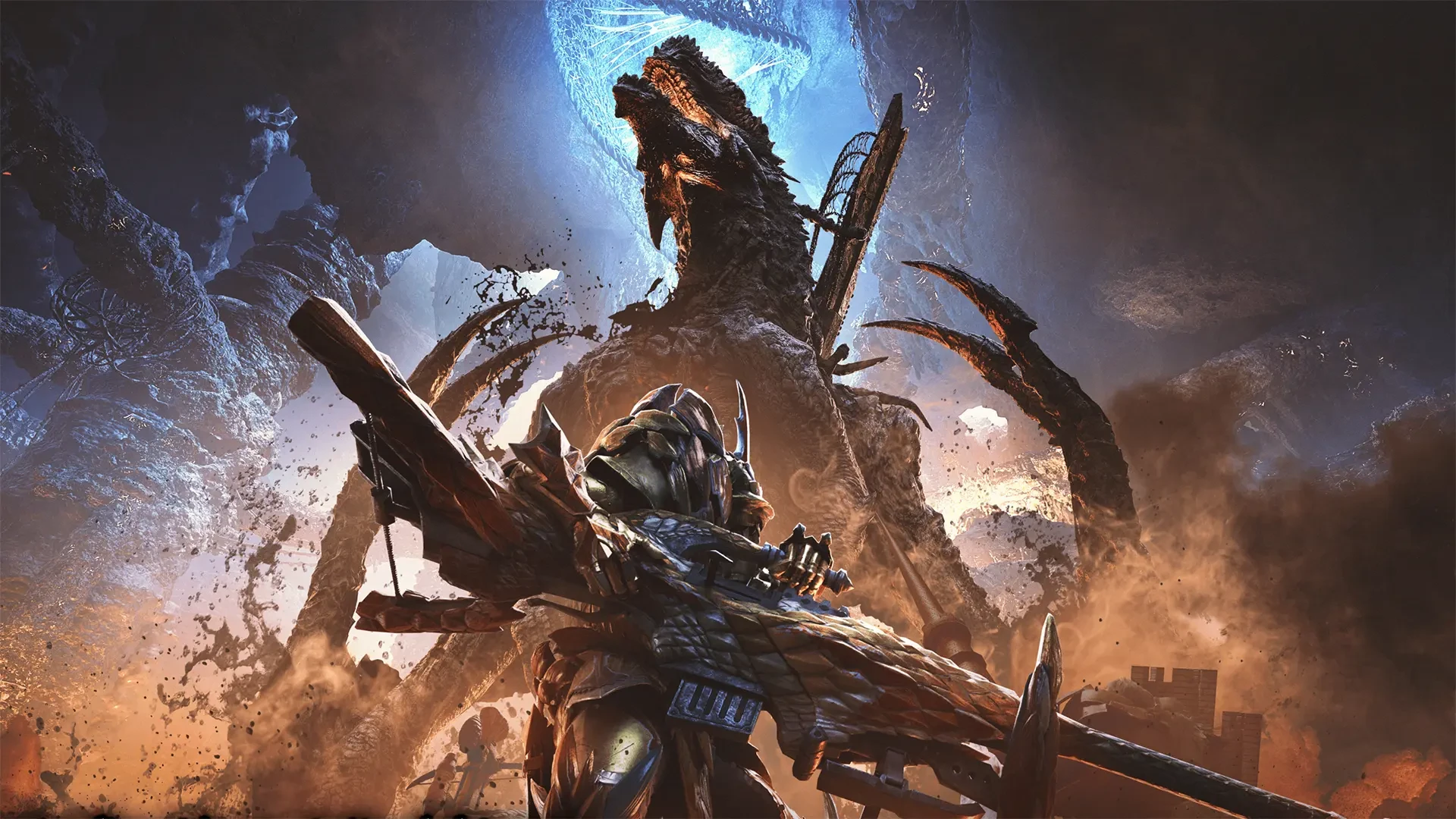

Title Update 4 (Version 1.040.00.00) is now live as of December 16, 2025 and focuses on expanding Monster Hunter Wilds’ endgame structure. The update introduces Gogmazios as a new Elder Dragon hunt unlocked after completing A First Cry at high Hunter Rank. The encounter is designed as a long, multi phase fight that emphasizes sustained damage, positioning discipline, and full build optimization, and it becomes a repeatable farm through dedicated quests once unlocked.
Endgame progression is extended through Gogma Artian Weapons, a new upgrade tier for existing Rarity 8 Artian weapons such as Angelbein and Skyscraper, converting them into Gogma variants (Animilater gets converted into Bethorned Agony, for example). These upgrades use Gogmazios materials and are handled via the Gogma Reinforce system at the Smithy, allowing players to strengthen or reroll weapon bonuses instead of replacing the weapon itself. Each Gogma Artian Weapon gains a Set Bonus Skill and a Group Skill, increasing the depth of endgame weapon tuning beyond previous limits.
The update also raises the difficulty ceiling with Arch-Tempered Jin Dahaad and new 9★ tempered monsters, expanding the pool of High Rank hunts available for repeat farming. In parallel, Armor Transcendence allows high-rank armor sets to be upgraded beyond their previous limits, improving slot flexibility and overall build efficiency for endgame setups.
Alongside new hunts and progression systems, Title Update 4 includes global weapon balance adjustments across all weapon types, as well as performance and stability improvements aimed at smoother multiplayer hunts and more consistent combat flow.
Capcom published the full official breakdown of Version 1.040.00.00, including system changes and balance adjustments, in the complete Title Update 4 patch notes.
Armor Transcendence
Before getting into Gogmazios, we want to start with Armor Transcendence, because this system directly affects how endgame builds are currently structured. Right now, the build variety in Monster Hunter Wilds is narrow for mechanical reasons. Most optimized setups fall into two broad patterns. One is running the Gore set to activate the full four-piece set bonus. The other is building around Apex γ sets, most commonly Rey Dau γ and Uth Duna γ, usually mixed with Lagiacrus armor for slot efficiency. Which specific pieces get used depends almost entirely on where the decoration slots are, not on fixed armor layouts.
These sets dominate not because they are the only strong skill packages available, but because they can actually support full jewel setups. The four-piece Gore set setup is popular because its set bonus applies Frenzy and grants a raw attack increase after overcoming it. This synergizes cleanly with skills like Antivirus and Coalescence, creating a complete damage loop that doesn’t rely heavily on external slotting.
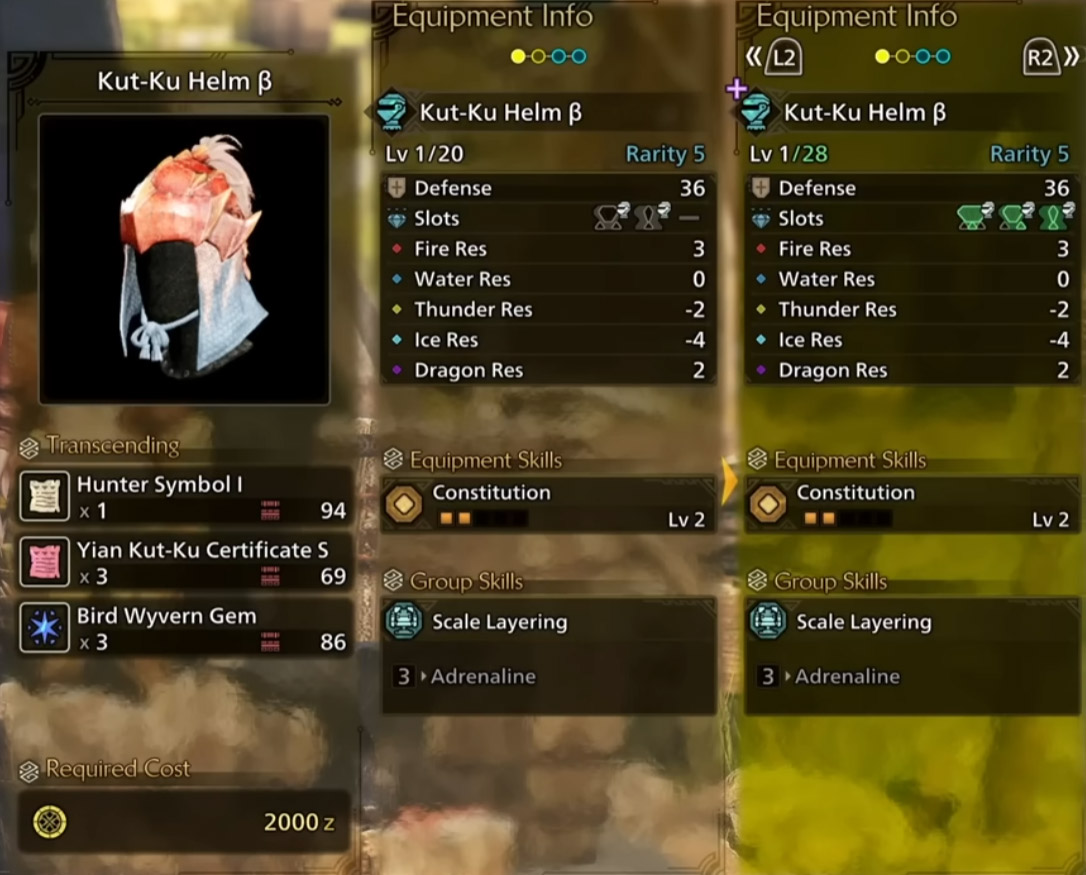
Decoration slots are the real constraint shaping the meta. Most endgame builds favor beta style armor pieces because they trade fixed skill levels for additional slots, which are needed to fit staples like Weakness Exploit, Critical Boost, or weapon-specific utility. Armor with strong native skills but poor slot access simply falls out of consideration. Armor Transcendence changes this by allowing HR100+ armor to gain decoration slots, including armor that previously had none. This doesn’t replace existing meta sets, but it removes the main limitation that kept many pieces out of endgame builds. Armor Transcendence applies to high-rank armor of Rarity 5 through 8. Rarity 5 and 6 pieces gain additional armor upgrade levels and extra decoration slots, which is a direct boost to build flexibility. Rarity 7 and 8 pieces gain additional armor upgrade levels only — they do not receive new slots, so the benefit is primarily higher defense rather than more jewel space.
This is where sets like G. Fulgur and Odogaron start to matter more. G. Fulgur armor already has a strong offensive skill spread, including Thunder Attack and Weakness Exploit, but has been awkward to slot cleanly. With Transcendence adding slots, G. Fulgur becomes much easier to integrate into mixed sets without sacrificing core jewels. Odogaron armor leans heavily into affinity and uptime through skills like Critical Eye and Speed Sharpening. These are naturally valuable for fast hitting weapons, such as Long Swords, but the lack of slot flexibility pushed Odogaron out in favor of Apex γ pieces. Once Transcendence opens up slots, Odogaron becomes a realistic option again instead of a theoretical one.
Because Armor Transcendence is locked behind HR100+, reaching that threshold becomes one of the biggest time sinks introduced in Title Update 4. Farming Hunter Rank through regular hunts can take dozens of hours, especially without optimized groups, which is why some players choose a LevelUpper's Hunter Rank 100 progression service — where rank is increased through standard in-game hunts without exploits or shortcuts, simply skipping the most repetitive part of the grind. This type of service can also be customized, allowing a professional hunter to focus on specific monsters, materials, or objectives requested by the player while progressing toward HR100.
Armor Transcendence doesn’t invalidate Gore set or Apex γ builds. It simply widens the pool of armor that can realistically compete. This system is what makes more of the existing armor roster usable in endgame build planning.
| Lots of new content to farm. Discount code at the end. |
Gogma Artian Weapons
Gogma Artian weapons are the second major system in Title Update 4 that directly affects endgame build planning. Where Armor Transcendence changes how armor pieces compete with each other, Gogma Artian weapons change how much of the build burden can sit on the weapon itself.
The first important clarification from the Monster Hunter showcase is that existing Artian weapons are reused. You do not need to craft a new weapon. Any premade Artian weapon can be upgraded into a Gogma Artian weapon using a new item from Gogmazios hunts called a Tarred Device.
Applying a Tarred Device converts the weapon into a Gogma Artian weapon and immediately applies three things at once: a stat focus, a Set Bonus Skill, and a Group Skill. There are three Tarred Device types:
- Attack-focused (red): +10 Attack, −15% Affinity
- Affinity-focused (purple): +10% Affinity, −10 Attack, −10 Element
- Element-focused (blue): +50 Element, −5% Affinity
At this point, it is still unclear whether Set Bonus Skills and Group Skills are tied to specific Tarred Device types or if the full pool can roll on any focus. For example, we don’t yet know if certain Set Bonuses are exclusive to Affinity focused upgrades or if every combination is possible.
Gogma Artian Great Sword:
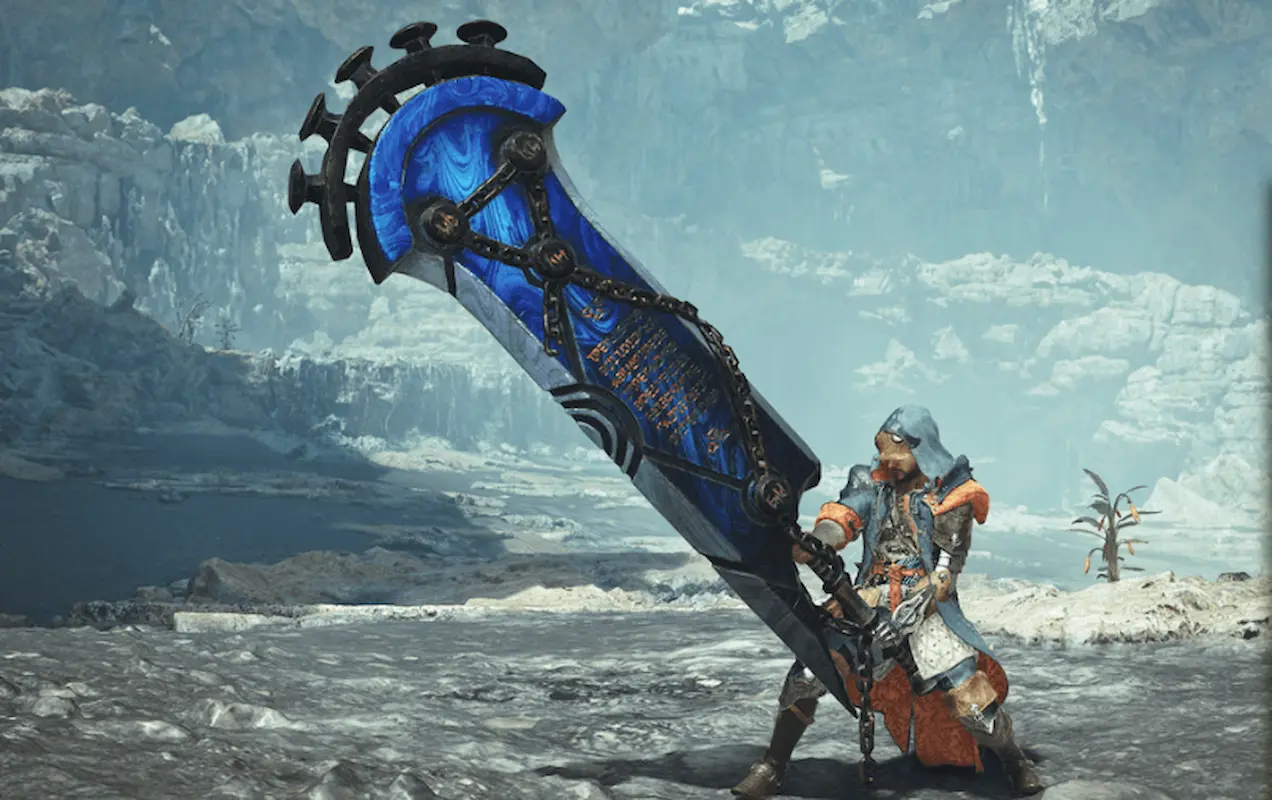
If the rolled Set Bonus Skill or Group Skill is bad, another Tarred Device can be applied to reroll both. This can be repeated until a usable combination appears. The most impactful change is how Group Skills now interact with weapons. Group Skills still require three pieces to activate. That rule has not changed. What has changed is that a Gogma Artian weapon can now count as one of those three pieces.
This matters immediately for builds that previously required awkward armor commitments. A concrete example is Alluring Pelt, the Group Skill that unlocks Diversion. If a Rarity 8 Gogma Artian weapon rolls Alluring Pelt, the weapon itself supplies one third of the Group Skill requirement. For Lance mains, this is a real shift. Diversion is central to aggro control, but committing three armor pieces just to enable it was rarely efficient.
With the weapon acting as the third piece, a two-piece Arkveld β setup becomes viable. Arkveld β already offers defensive and utility-oriented skills that suit Lance play, but previously demanded too much investment. With Alluring Pelt coming from the weapon, those two armor pieces are enough to activate Diversion while still leaving room for core damage skills like Weakness Exploit and Critical Boost.
Not every Group Skill roll will be useful. Based on what we’ve seen so far, the Group Skill pool is not guaranteed to be combat-only. Some rolls may be situational, redundant, or outright irrelevant for endgame combat builds. In those cases, the weapon is still a Gogma Artian, but the Group Skill itself contributes nothing and becomes a reroll target.
Once a Gogma Artian weapon is created, further upgrades are handled through two options: Keep Bonuses and Amend Bonuses. Keep Bonuses locks in the current Set Bonus Skill, Group Skill, and original Artian reinforcement, and then applies a random reinforcement tier to the existing reinforcement. Possible outcomes include:
Attack reinforcement:
- +5 (base)
- +6
- +8
- +12 (EX)
Affinity reinforcement:
- +5 (base)
- +6
- +8
- +10 (EX)
Elemental reinforcement:
- +50 (base)
- +60
- +70
- +90 (EX)
The spread here is large. Four Attack reinforcements rolling EX results in a massive raw increase compared to four base rolls. Two otherwise identical weapons can end up separated by nearly 30 raw attack purely due to RNG.
Amend Bonuses is the full reset option. It rerolls the Set Bonus Skill, the Group Skill, the Artian reinforcement, and applies new random reinforcement tiers. This option exists to salvage bad weapons, but it also means full RNG across every layer of the system.
An Attack-focused Tarred Device now applies a significant affinity penalty. For weapons like Great Sword, maintaining reliable crit may require stacking Weakness Exploit, Maximum Might, and Latent Power, depending on how Gogmazios and Arch-Tempered Jin Dahaad armor is structured and how many slots Armor Transcendence actually provides.
Affinity-focused upgrades suddenly look more attractive, not because element overtook raw, but because crit consistency may be more valuable than raw that then has to be repaired through armor. On top of that, reinforcement EX rolls introduce a performance gap that planning alone cannot smooth out. A pre-TU4 “perfect” Artian can be outperformed purely through reinforcement luck.
Gogmazios
Gogmazios is the headline monster of Title Update 4 and the first Elder Dragon being added to Monster Hunter Wilds. Access is gated at HR100+ and requires clearing the main mission A First Cry. The hunt is presented as a special endgame operation rather than a standard contract-style quest, supporting an expanded format of up to four players alongside up to four Support Hunters.
The Support Hunter lineup is a key part of how this encounter is framed. Fabius and Nadia are confirmed as a Support Hunter for the Gogmazios quest, and Title Update 4 adds Griffin and Nightmist to the Support Hunter roster. Nadia is a returning character, known as the Ace Gunner from Monster Hunter 4 Ultimate, while Griffin (Great Sword) and Nightmist (Light Bowgun) expand the available support options. While not every Support Hunter may be mandatory for this fight, their inclusion reinforces that Gogmazios is designed as a large-scale encounter rather than a conventional hunt.
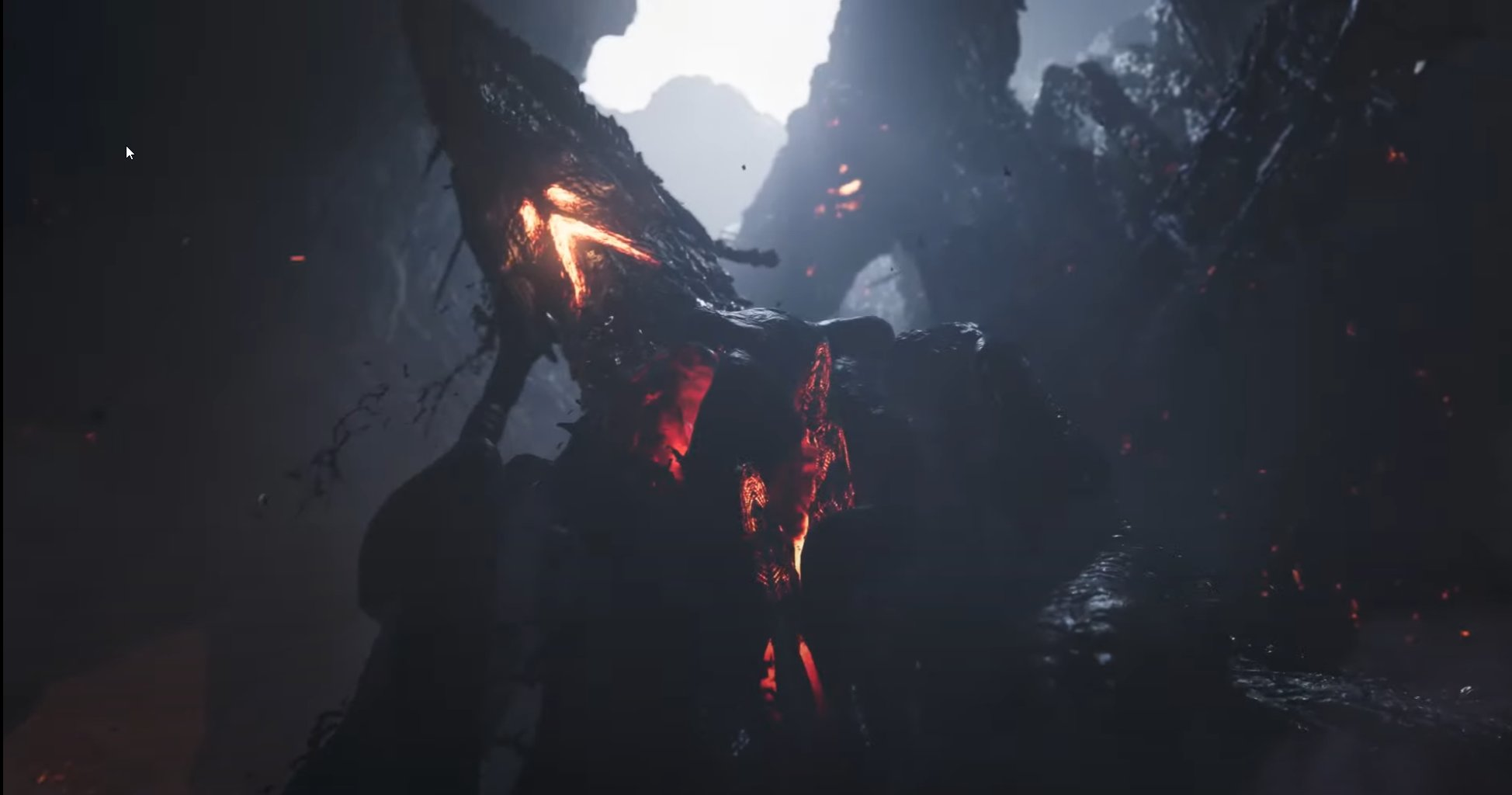
From a mechanical standpoint, the fight is confirmed to revolve around Gogmazios’ tar-like oil. This oil spreads across the arena and the monster itself, and it can be ignited by fire, creating explosive interactions and persistent hazards. This immediately differentiates the encounter from Apex γ or tempered hunts, pushing it toward area control, positioning, and timing rather than pure damage racing.
The way Gogmazios is presented strongly echoes older siege encounters from previous Monster Hunter titles. The combination of environmental hazards, an expanded team format, and a permanent repeatable quest unlocked after completion all point toward a long-form endgame hunt designed to be farmed repeatedly for progression materials.
We also can’t ignore the way Fabius’ role is implemented in the encounter. During Gogmazios’ large-area attacks, players are expected to position themselves behind Fabius to avoid massive damage, turning him into a literal frontline shield during specific phases of the fight. These moments shift the focus away from aggression and toward positioning, survival, and coordinated movement, reinforcing Gogmazios as a structured endgame encounter rather than a pure damage race.
And yes — Proof of a Hero does play during the encounter. The Wyverian railgun sequence happens earlier in the fight (which functions like a Dragonator / Demolisher), while Proof of a Hero kicks in much closer to the end, reinforcing Gogmazios as a full-scale endgame setpiece rather than a standard hunt.
Additional Changes
Arch-Tempered Jin Dahaad
Title Update 4 introduces Arch-Tempered Jin Dahaad as a direct endgame difficulty escalation. This is not side content — it’s a pressure check meant for players already comfortable with Apex γ hunts and optimized HR builds. Expect higher damage output, stricter punish windows, and less room to recover from mistakes, especially if you try to approach it with untouched pre-TU4 gear.
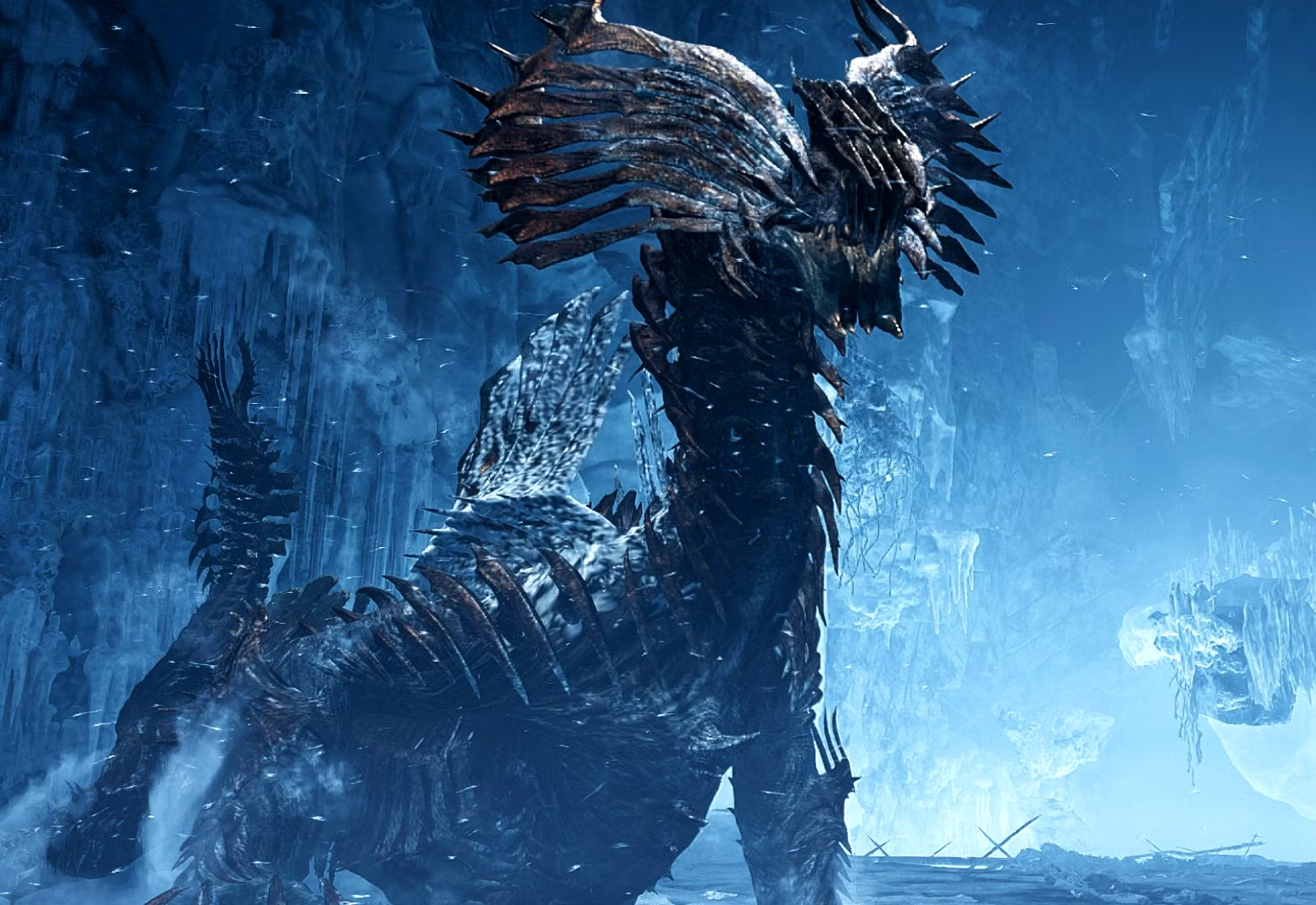
The timing matters. Arch-Tempered Jin Dahaad lands alongside Armor Transcendence and Gogma Artian weapons, which strongly suggests it’s tuned around players actively engaging with those systems rather than sitting on older setups.
CPU/GPU Optimization
The December update includes the first major CPU/GPU optimization pass, confirmed for all platforms.
Capcom’s stated focus is on core engine bottlenecks:
- improved frame processing and collision handling,
- reduced strain from simultaneous effects,
- removal of unnecessary background processes,
- and over 100 processing improvements affecting players, monsters, Seikrets, Palicoes, NPCs, UI elements, effects, and environmental systems.
This patch is critical. On PC especially, Monster Hunter Wilds has been in a genuinely poor technical state. On lower-end and even mid-range systems, performance has often been unacceptable — extremely low FPS even on the lowest settings, constant stuttering, and freezes that interrupt hunts outright. This isn’t an edge case; it’s been a widespread issue that has prevented a large part of the PC audience from playing at all.
Lumenhymn Festival
The Lumenhymn Festival launches alongside Title Update 4 and runs from December 19, 2025 to January 14, 2026. As expected from Monster Hunter seasonal events, it temporarily alters hub presentation and activities, including handler outfits, Seikret decorations, the Diva’s song list, Grand Hub visuals, canteen menus, and Barrel Bowling.
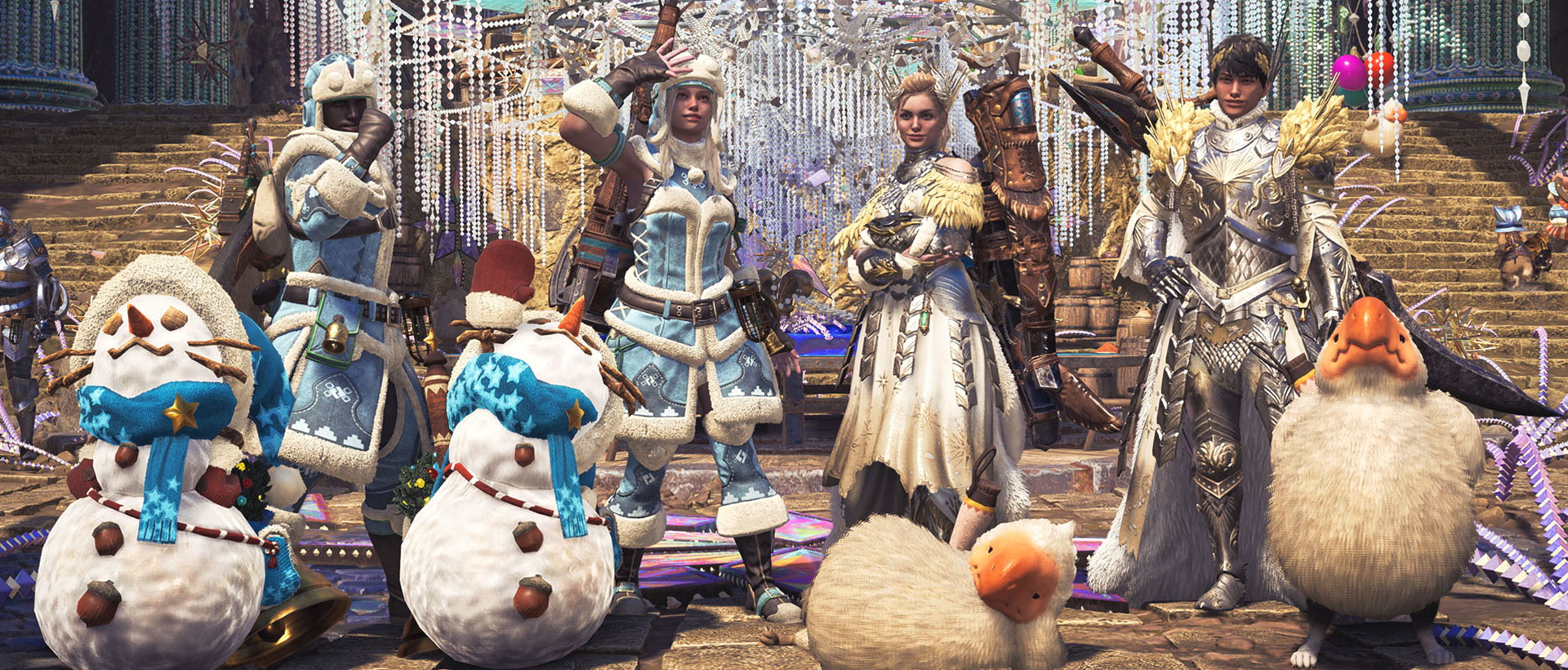
Festivals traditionally serve as return points, and in this case it coincides with new endgame content and the first wave of performance fixes — which is likely intentional.
Additional Patch Notes
Beyond headline content, Version 1.040.00.00 includes a large number of quality-of-life changes, balance adjustments, and system fixes that quietly matter a lot.
On the systems and UI side, quest management has been improved with better sorting options, clearer SOS and lobby quest visibility, faster access to recently played quests, and cleaner menu navigation overall. Equipment management is also better, with improved skill-based sorting, clearer armor skill visibility, and expanded appearance loadout options.
On the gameplay side, several skills received meaningful buffs or fixes. Guard Up now always reduces damage when guarding and scales more aggressively at higher levels. Skills like Charge Up, Ballistics, Elemental Absorption, and Flayer were adjusted to activate more reliably and hit harder. Multiple Set Bonus Skills also received duration and strength buffs, making them more attractive in endgame builds.
Weapon balance changes are extensive across nearly every weapon type. Many weapons received raw damage and elemental scaling increases, smoother chaining after Perfect Guards or counters, and fixes to long-standing input or responsiveness issues. Lance, Gunlance, Great Sword, Switch Axe, Charge Blade, Bowguns, and Bow all benefit noticeably from these changes, reinforcing the overall push toward more fluid combat.
Support Hunters also received attention. Their damage scales better at higher Hunter Ranks, their combat behavior is more consistent, and numerous bugs were fixed where they would disengage, mis-target monsters, or behave incorrectly during specific hunts. This matters directly for Gogmazios and other large-scale encounters.
Finally, the update includes a long list of bug fixes affecting monsters, player actions, gestures, Seikrets, UI elements, and online functionality — many of them resolving issues that players have been complaining about since launch.
| Want to jump into TU4 endgame ready? LUBLOG10 saves 10% on MH Wilds services. |
What’s Coming Next
With Title Update 4 landing in December, Wilds is clearly entering its late–live-service phase, but it doesn’t look like things are slowing down yet.
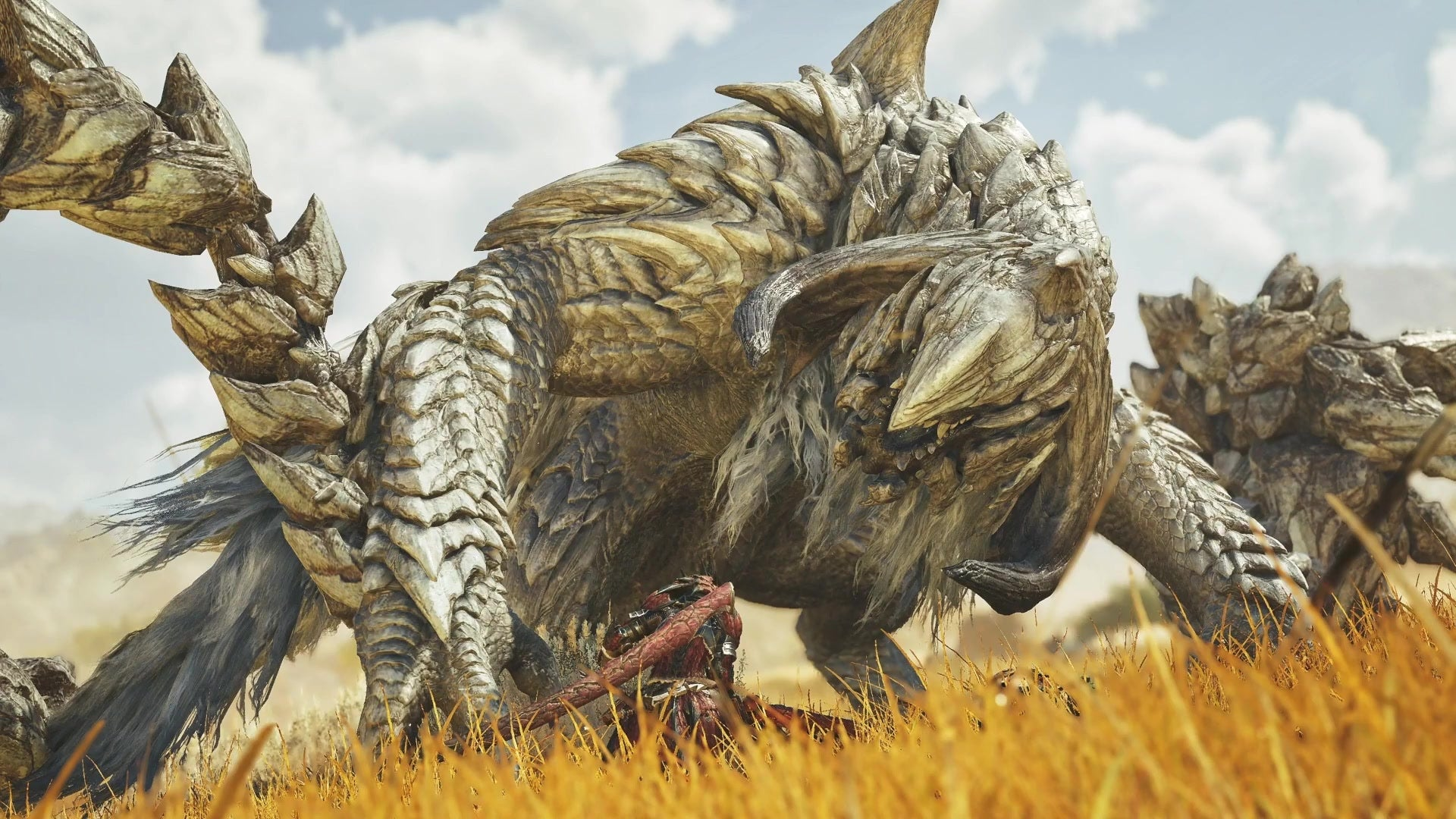
The next confirmed piece of content is Arch-Tempered Arkveld, scheduled for a later update. Given Arkveld’s existing role in defensive and utility-oriented builds, its Arch-Tempered version is unlikely to be a simple numbers bump. Just like Jin Dahaad, this is expected to further tighten endgame expectations and push players toward fully optimized post-TU4 setups, especially as more people settle into Armor Transcendence and Gogma Artian weapon rolls.
On the technical side, Capcom has already confirmed that optimization work will continue in January and February. That’s important. The December CPU/GPU patch is the first step, not the finish line. The fact that multiple follow-up patches are already scheduled strongly suggests that the performance problems — especially on PC — are deep enough to require sustained effort. If these updates do what they’re supposed to, they should gradually bring back players who simply couldn’t run the game properly before.
Optimization roadmap:
| Timeline | Version | Focus | Key Changes |
|---|---|---|---|
| December 2025 | Title Update 4 | CPU/GPU Optimization (All Platforms) | Global processing optimizations across all platforms, including frame processing, collision handling, and simultaneous effects. Reduced CPU and GPU load by removing unnecessary processes. Over 100 performance improvements affecting players, monsters, Seikrets, Palicoes, NPCs, UI, visual effects, and environments. |
| January 2026 | Ver. 1.040.00.01 | PC-Specific Optimization | Optimization of PC-only processes. New graphics and CPU settings with additional presets to reduce processing load. Improved shader compilation to reduce stuttering. VRAM usage improvements. Faster texture streaming for the High-Resolution Texture Pack. |
| February 2026 | Ver. 1.041 | Additional Optimization | Further CPU and GPU optimization. Introduction of level-of-detail (LOD) quality settings for 3D model polygon meshes to reduce GPU load during gameplay. |
And then there’s the bigger question hanging over all of this. Title Update 4 puts Wilds only a few months away from its one-year anniversary. At this point in the Monster Hunter lifecycle, expectations naturally shift. Historically, this is the window where Capcom starts setting the stage for a major expansion rather than just incremental updates. Nothing has been announced yet, but the timing is hard to ignore. At LevelUpper, hopes for a full DLC expansion, like Iceborne or Sunbreak are high. Wilds now has a solid endgame foundation: scalable systems, repeatable siege-style content, Arch-Tempered pressure hunts, and a clear progression loop. That’s exactly the kind of groundwork you lay before expanding the game’s scope rather than just stacking more difficulty on top.
For now, everything beyond Arch-Tempered Arkveld and continued optimization is speculation. But with TU4 pushing systems, difficulty, and infrastructure all at once, Wilds feels like a game preparing for its next phase.
If Gogmazios or other Title Update 4 endgame content feels overwhelming, there are also external options available. LevelUpper offers Monster Hunter Wilds boosting services covering Hunter Rank progression, endgame hunts, and targeted farming, all done through standard in-game gameplay without exploits.
FAQ
Gogmazios is unlocked after completing the main mission A First Cry and reaching Hunter Rank 100 or higher. Once unlocked, the hunt becomes permanently available as repeatable endgame content rather than a one-time story encounter.
Monster Hunter Wilds Title Update 4 releases on December 16, 2025 as Version 1.040.00.00. This update is focused almost entirely on endgame progression, adding the first Elder Dragon hunt, new weapon and armor progression systems, higher difficulty hunts, and major performance optimizations.
Title Update 4 is a large-scale endgame update that expands how progression works after HR100. It introduces Gogmazios as a repeatable Elder Dragon hunt, adds Armor Transcendence for High Rank armor, upgrades Artian weapons into Gogma Artian weapons, raises the difficulty cap with Arch-Tempered hunts, and rebalances weapons and skills across the board.
Gogmazios's fight structure strongly resembles classic Monster Hunter siege-style encounters. The fight is long, multi-phase, heavily focused on positioning and survival, and supports an expanded format with up to four players and up to four Support Hunters. It is designed to be farmed repeatedly rather than cleared once.
Tarred Devices are special upgrade items obtained from Gogmazios hunts. They are used to convert existing Rarity 8 Artian weapons into Gogma Artian weapons. Applying a Tarred Device determines the weapon’s stat focus and rolls a Set Bonus Skill and a Group Skill directly onto the weapon.
Gogma Artian weapons are upgraded versions of existing Artian weapons. Instead of crafting a new weapon, players enhance their current Artian weapon using Tarred Devices. The upgraded weapon gains additional stats, a Set Bonus Skill, a Group Skill, and access to reinforcement tiers that significantly raise its power ceiling.
Armor Transcendence is a new system that allows HR100+ armor to gain additional decoration slots. It does not change the armor’s base skills but removes the slot limitations that previously prevented many armor pieces from being viable in endgame builds.
The Lumenhymn Festival is a seasonal event running from December 19, 2025 to January 14, 2026. It features temporary hub changes, cosmetic updates, event activities, and themed rewards. Its timing aligns with TU4’s endgame additions and performance fixes, making it a common return point for players.
Keep Bonuses upgrades the weapon while keeping its current Set Bonus Skill, Group Skill, and Artian reinforcement. It adds a new random reinforcement tier on top, making it the safer option when the weapon already has good bonuses.
Amend Bonuses fully rerolls the weapon. It resets the Set Bonus Skill, Group Skill, Artian reinforcement, and applies new random reinforcement tiers. This option is used to fix bad rolls but comes with full RNG risk.
Title Update 4 adds the kind of scalable systems, repeatable endgame content, and difficulty layers that Monster Hunter games typically introduce before a major expansion.