

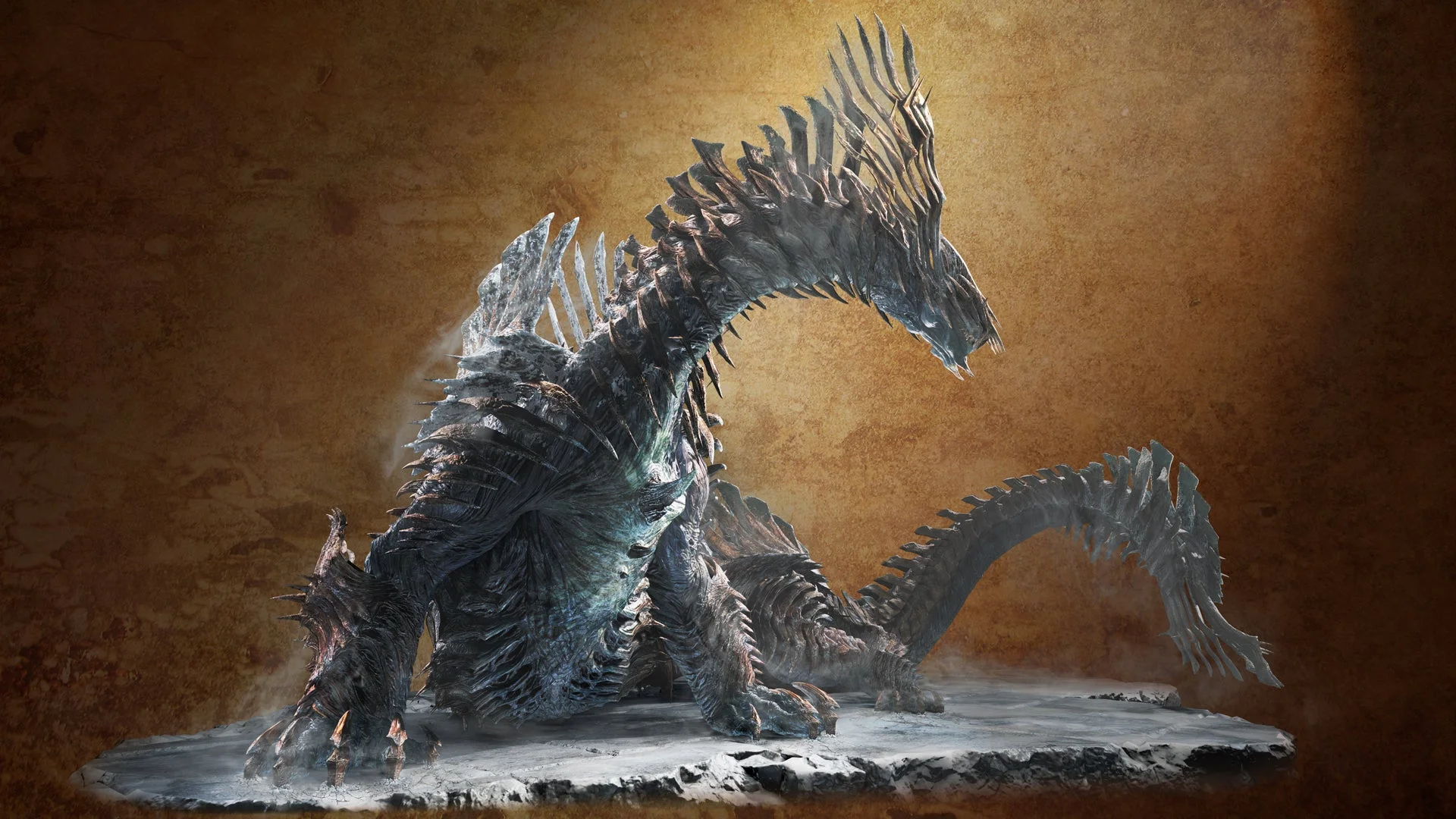

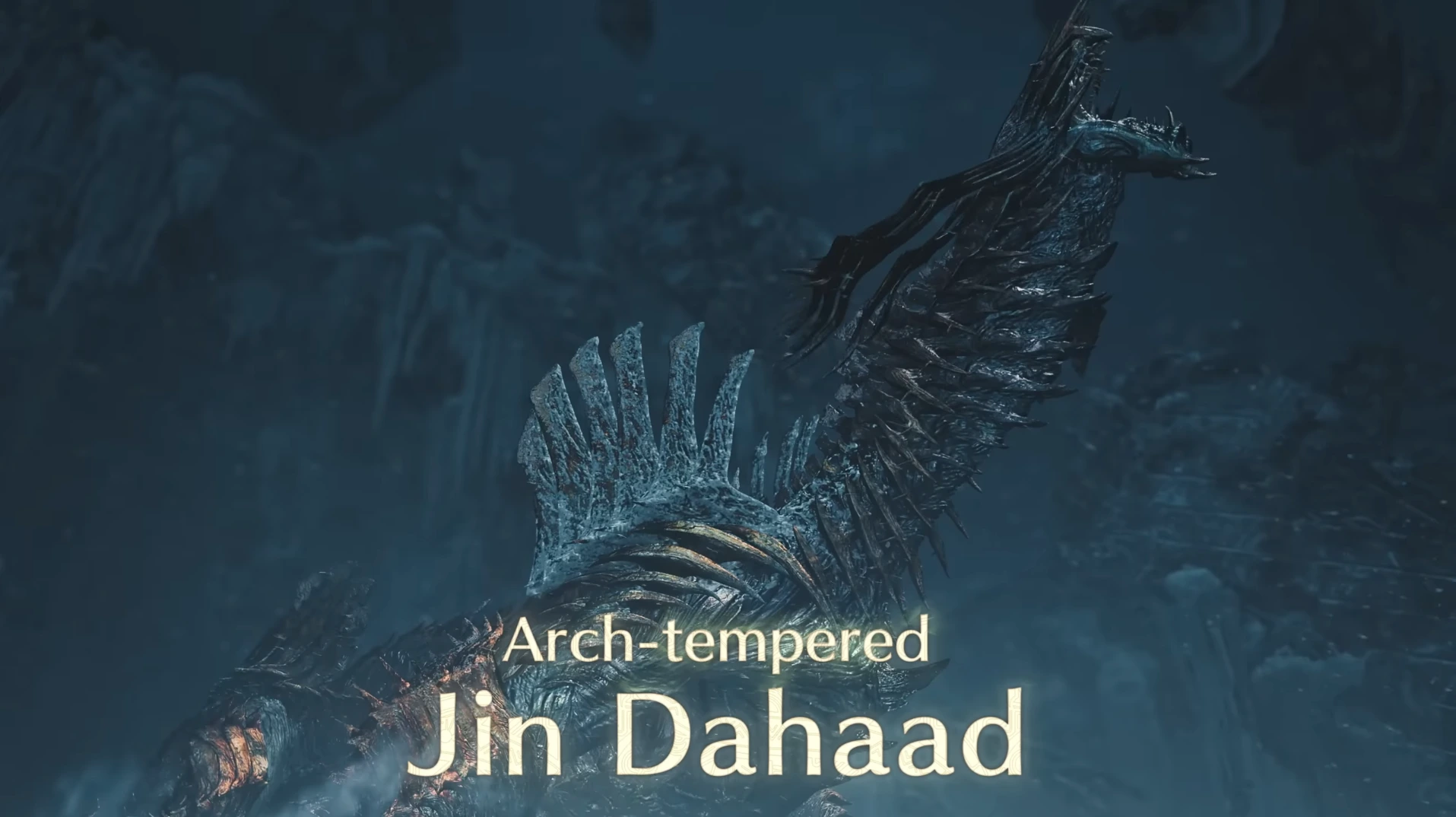
Arch-Tempered Jin Dahaad does not introduce new mechanics. The moveset, arena layout, and attack patterns are the same as the standard hunt. The meaningful change is damage scaling. Attacks that were previously survivable now remove most of your health bar, which drastically reduces how often you can reset after a mistake.
Because damage is higher across the board, decisions that were previously “bad but recoverable” now lead directly to carts. The hunt doesn’t become more complex. It becomes less forgiving.
This is why many players struggle with the Arch-Tempered version despite knowing the monster well.
What Actually Changes And What To Do
In the standard hunt, taking a hit from Ice Sweep or Forward Ice Breath usually means healing and repositioning. In the Arch-Tempered version, the same hit often leaves you low enough that:
-
healing becomes mandatory instead of optional
-
healing windows matter more than damage windows
-
trading hits is no longer viable
This shifts the hunt away from aggression and toward damage avoidance and clean punish selection.
Nothing about Jin Dahaad’s behavior changes. What changes is the outcome when you make the same decisions you’ve always made.
Arena control becomes non-negotiable. The arena itself doesn’t change, but higher damage makes terrain mistakes lethal.
Ice patches still function the same way: reduced traction, slower repositioning, and limited dodge distance. The difference is that getting clipped while standing on ice now usually puts you in one-shot range.
A very common scenario looks like this:
-
Jin Dahaad uses Ice Sweep
-
Hunter rolls backward out of habit
-
Backward roll lands on frozen ground
-
Movement slows
-
Delayed Ice Burst or Forward Ice Breath follows
-
Hunter attempts to heal and gets clipped
-
Cart
Nothing new happened. The same sequence in the standard hunt often leaves you alive. In the Arch-Tempered version, it doesn’t.
The same logic applies to Ice Nova. If you are forced to sprint across frozen ground to reach cover when the Nova starts charging, you are already late. This is why positioning between Novas matters more than reacting to the Nova itself.
Sleep is one of the few reliable ways to reset the hunt on your own terms.
Jin Dahaad is unusually susceptible to sleep, especially in longer hunts. With proper setup, it can be put to sleep multiple times per run. In coordinated groups, this often happens three to four times.
Sleep does three important things in the Arch-Tempered hunt:
-
it forces a clean reset of positioning
-
it creates a safe window to break priority parts
-
it delays additional Ice Nova cycles by shortening dangerous phases
If bombs are available, use them. If not, let the heaviest hitter in the group take the wake-up. Sleep is not about damage optimization here — it is about stabilizing the hunt and preserving arena resources.
This is why directional movement matters more than reaction speed. Once damage values go up, positioning stops being a general concept and starts working differently depending on weapon type. The same Ice Sweep → frozen ground sequence plays out very differently for melee and ranged hunters, even though the mistake is identical.
Melee Weapons (Greatsword, Hammer, Switch Axe, etc.)
Melee weapons fail this hunt when they overstay close range after a hit connects.
In the standard hunt, taking chip damage while close to Jin Dahaad usually means:
-
rolling once
-
healing
-
re-engaging from roughly the same angle
In Arch-Tempered, that same decision often puts you into a second hit because:
-
you are already inside the monster’s threat zone
-
frozen ground limits your exit
-
healing forces you to stand still at the worst possible moment
For melee, correct positioning means:
-
staying off-angle, not directly in front of the head
-
committing to hits only when you already know your exit path
-
disengaging before you need to heal, not after
A common correction that stabilizes hunts:
After taking chip damage, do not heal immediately.
First, move laterally onto clean ground.
Heal only once you are no longer inside follow-up range.
Most melee carts happen because healing is attempted while still within range of Ice Breath, Tail Sweep, or Ice Burst.
This is also why part focus matters. Breaking the head, tail, and both back parts reduces how often Jin Dahaad can access Ice Nova. For melee weapons, directing damage into these parts is not just about damage efficiency — it directly reduces how many arena-wide resets you will be forced to survive later.
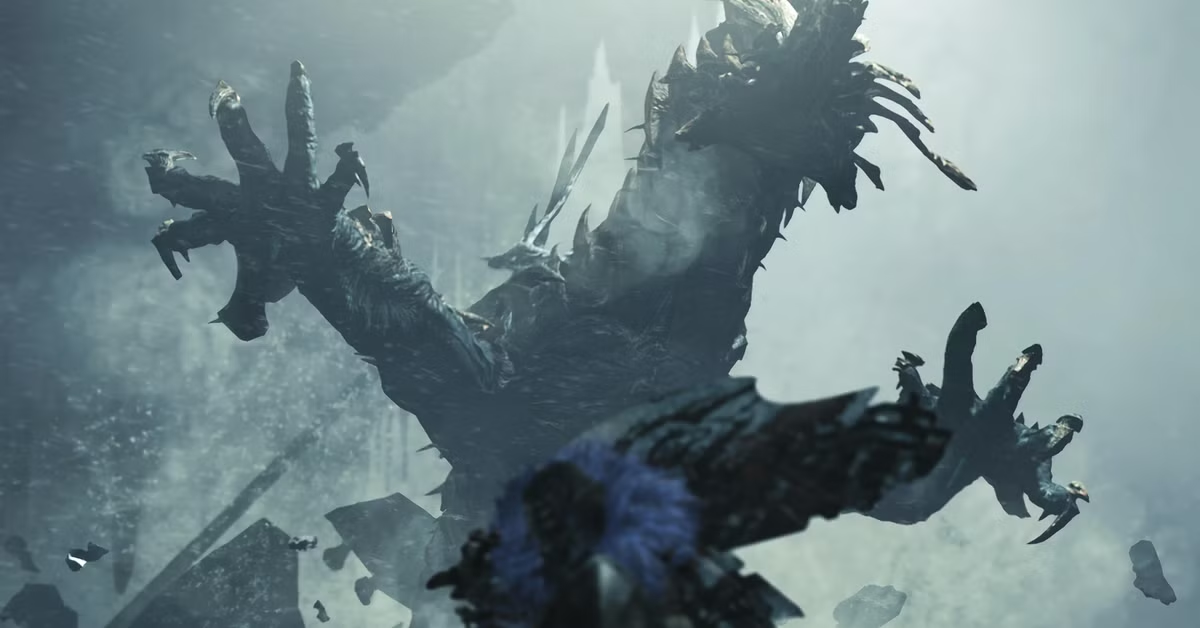
Ranged Weapons (Bow, Bowguns)
Ranged weapons fail this hunt for the opposite reason: distance without terrain awareness.
In the standard hunt, ranged players can afford to:
-
backpedal
-
roll backward repeatedly
-
reset while maintaining line of sight
In Arch-Tempered, that habit often puts ranged hunters:
-
directly onto frozen ground
-
out of stamina
-
still inside long-range follow-ups
Because damage is higher, ranged weapons no longer have the luxury of “soft resets” after being clipped.
For ranged, correct positioning means:
-
playing side-on, not straight back
-
repositioning diagonally instead of retreating in a straight line
-
avoiding long backward dodges that cross ice patches
A common Bow cart sequence looks like this:
-
Ice Sweep clips the edge
-
backward dodge lands on frozen ground
-
stamina drains faster than expected
-
Forward Ice Breath connects before a second reposition
-
cart
The fix is not reaction speed. The fix is directional discipline.
Ranged players should also actively collect and use Slinger ammo from regions one and three. Flash Pods are limited, and Jin Dahaad applies bind effects frequently. Slinger control reduces how often you are forced into recovery states, which is more valuable than reacting to binds after they land.
Attacks to Watch Out For
Once healing becomes mandatory and trading stops being viable, certain attacks stop being “damage” and start being position checks.
-
Ice Breath stops being about avoiding the hit and becomes about where you end up afterward.
-
Ice Nuke stops being a spectacle and becomes a resource check on remaining boulders.
-
Wall Climb → Charge stops being an attack to dodge and becomes a phase where you disengage entirely.
-
Binding Ice Grab stops being annoying and becomes lethal if Bind Resistance isn’t slotted.
Jin Dahaad can also chain body attacks more aggressively in the Arch-Tempered hunt. In particular, the double belly slam punishes hunters who re-enter too early after the first impact. Treat these sequences as no-entry zones until the full animation resolves.
These attacks don’t change mechanically. Their context does.
| AT Jin Dahaad doesn't forgive mistakes. If you want the rewards without the learning curve, promo code at the end. |
Positioning Rules
These are not tips — they are direct consequences of higher damage values.
-
Do not roll backward unless you know the ground behind you is clear.
-
Do not heal while standing on ice unless you are already safe from follow-ups.
-
Do not engage during Wall Climb → Charge.
-
Do not break every boulder early if you expect multiple Ice Nukes.
-
Do not stay directly in front of the head unless you are committing to a punish and exiting immediately.
If you follow these, the earlier Ice Sweep example stops being a cart sequence and becomes a recoverable mistake again.
Nothing about Jin Dahaad’s behavior changes. What changes is that damage removes your buffer for bad positioning.
In the standard hunt:
-
mistakes cost time
In Arch-Tempered:
-
mistakes cost hunts
Once you accept that, the hunt stops being about playing better and starts being about playing cleaner — especially in how you move after getting hit.
What You Get for Clearing AT Jin Dahaad
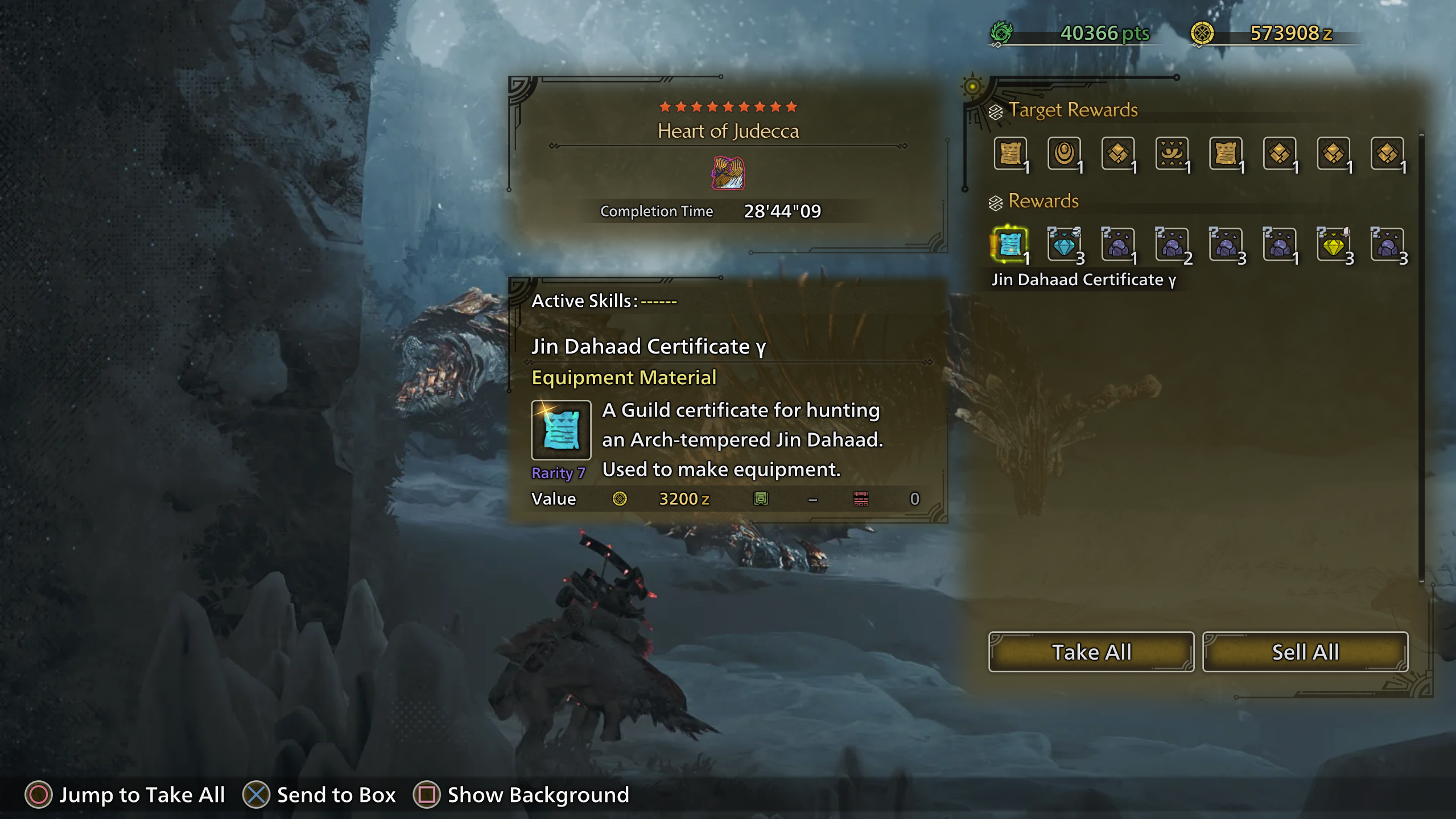
Clearing Arch-Tempered Jin Dahaad is not about unlocking new content. You already have access to everything this hunt leads into. What you are farming here is gear efficiency — armor pieces that let you survive high-damage hunts without gutting your damage output.
The main reward is Jin Dahaad Gamma armor. These pieces are not designed to be worn as a full set. Their value is in how cleanly they slot into existing endgame builds.
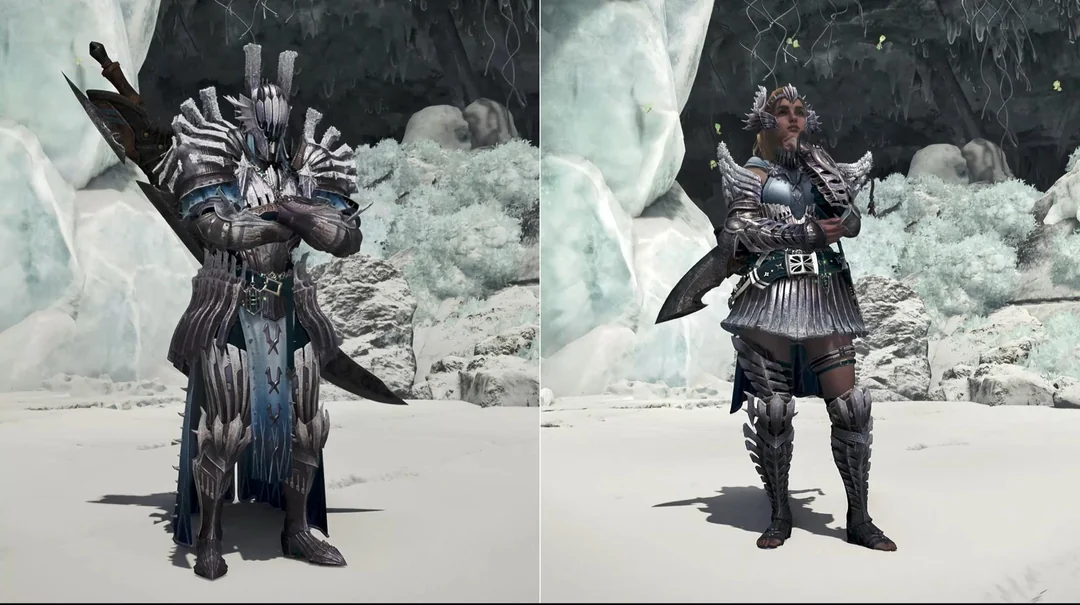
Jin Dahaad Gamma Armor Overview
| Armor Piece | Key Skills | Why It’s Used |
|---|---|---|
| Jin Dahaad Helm γ | Foray | Situational damage boost when status is active |
| Jin Dahaad Mail γ | Agitator | High uptime due to frequent enrages |
| Jin Dahaad Braces γ | Weakness Exploit, Coalescence | Strong skill density for mixed sets |
| Jin Dahaad Coil γ | Agitator, Bind Resistance | Direct answer to AT cart conditions |
| Jin Dahaad Greaves γ | Weakness Exploit, Foray | Efficient leg slot with damage value |
You are not chasing raw defense here. You are chasing compressed skills that reduce how many compromises your build has to make.
Skill Context
Agitator
Arch-Tempered Jin Dahaad enrages often and stays enraged longer. Agitator has reliable uptime and rewards playing clean without forcing aggression. It fits naturally into longer, safer hunts where you wait for real openings instead of trading.
Weakness Exploit
Still mandatory for most endgame builds. The Gamma pieces allow you to maintain WEX while freeing up other armor slots for comfort or utility.
Bind Resistance
This skill directly addresses one of the most common failure points in the Arch-Tempered hunt. Faster recovery from Binding Ice Grab often decides whether you can reposition and heal safely or get clipped again and cart.
Foray and Coalescence
These are not required, but they synergize well with hunts that apply frequent blights and status effects. They reward stabilization and controlled play rather than reckless damage chasing.
Jin Dahaad’s Revolt (Set Bonus Context)
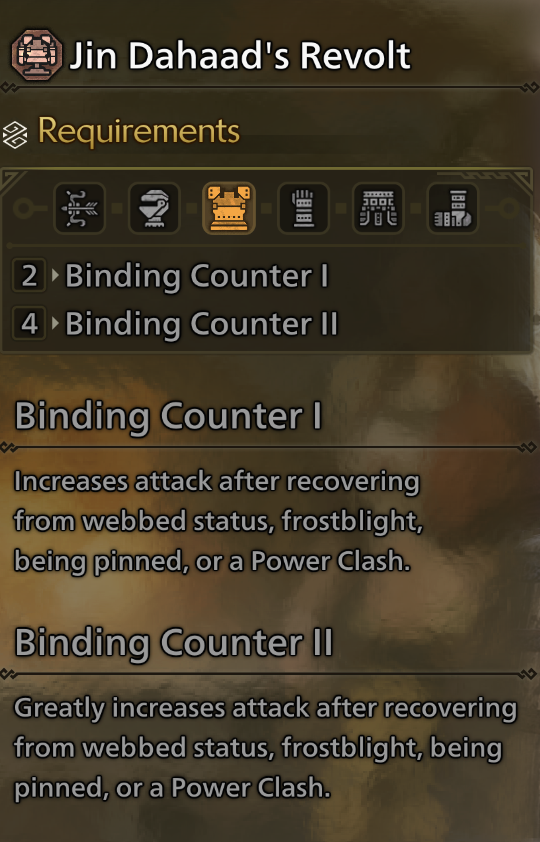
The Gamma armor retains the Jin Dahaad’s Revolt set bonus:
-
2-piece: Binding Counter I
-
4-piece: Binding Counter II
This bonus improves recovery after bind effects, but it is not a reason to force a full set. Most effective builds use one or two Gamma pieces and treat the set bonus as incidental value rather than a core mechanic.
| Need rewards without headache? Code LUBLOG10 for 10% off MH Wilds services. |
Where This Armor Fits in Endgame Builds
Jin Dahaad Gamma pieces are commonly used in:
-
comfort-oriented Greatsword builds
-
Bow builds that need survivability without giving up damage
-
mixed sets for other Arch-Tempered or high-damage hunts
They are rarely used to push peak DPS numbers. Their purpose is consistency. They let you survive mistakes that would otherwise end a hunt, without turning your build into a defensive slog.
Farming Reality
Arch-Tempered Jin Dahaad is not a fast or forgiving farm. Clear times are longer, and failed attempts are common until positioning, part focus, and recovery discipline are consistent.
If your goal is to complete specific Gamma pieces rather than to master the hunt through repetition, farming assistance becomes a practical option. For players who want the armor without repeating long, high-risk runs, our Arch-Tempered Jin Dahaad farming service is available.
Closing Thoughts
Arch-Tempered Jin Dahaad isn’t asking you to relearn the fight. Everything it does is already familiar if you’ve cleared the standard version. What changes is that the hunt stops giving you room to be careless.
You can still play your weapon the same way. You can still punish the same openings. What you can’t do anymore is assume that a bad roll, a late heal, or standing on ice for a second too long is something you’ll just fix afterward. In this version, those moments usually decide the hunt.
Once you start managing space between attacks, keeping boulders alive for later Novas, and treating recovery as something you plan ahead instead of react to, the fight settles down. It stops feeling random. Clears become repeatable.
That’s really all Arch-Tempered Jin Dahaad is doing. It doesn’t raise the skill ceiling. It lowers the margin for error.
FAQ
You can, but the timing and positioning matter.
There are multiple valid plays:
-
Tight positioning: if you don’t stray too far from Jin Dahaad, you can side-roll through the edge of the breath. The hitbox is wide, but not infinite.
-
Terrain abuse: standing near a boulder, wall, or small ledge above your current position can break the line and let the breath pass underneath or beside you.
-
Distance play: if you’re healing or repositioning far out, fully disengage. The ice breath has a max range — if you’re far enough, it simply won’t reach.
-
Last resort: block. This is still the safest option if you’re caught mid-animation.
The mistake most players make is half-committing: being too far to roll cleanly, but not far enough to outrange it.
Jin Dahaad is significantly tankier than 9★ tempered, which changes how the fight plays.
What to expect:
-
2–3 AoE nukes, not just one
-
Longer final phase
-
More pressure from repeated charges and slams
Plan the hunt as an endurance fight, not a burst DPS race. Save cover, manage stamina, and assume another nuke is coming even when it looks close to dead.
This is the AoE nuke / super attack — same mechanic as before, but you’ll see it more often now.
Support hunters or your Palico call out to hide behind a rock, and support hunters will usually move toward cover.
Drop everything and run. Don’t heal, don’t sharpen, don’t greed damage.
Important detail:
Boulder economy matters.
-
Jin Dahaad can break rocks easily
-
Don’t waste boulders for damage early
-
Save intact rocks strictly for nukes, especially in the final zone
The old single body slam is gone. It now does a double slam with a delayed second hit.
Most carts happen because players dodge the first slam and roll back in too early.
Solution: keep moving sideways until both slams finish, or hold guard until the animation fully ends.
If available during event periods, Fabian and Nadia are top-tier picks.
If they’re unavailable:
-
Olivia – strong stuns, helps interrupt pressure windows
-
Mina and/or Alessa – reliable healing, keeps you alive during extended final phases
They also help pull aggro and reduce pressure, which matters a lot in this fight.